
How Does a 30 Ton Trackless Transfer Cart Facilitate The Transfer Of Large Transformers?
Recently, Newld launched a new 30 ton battery powered trackless transfer cart, designed to address the large size and weight of equipment in the manufacturing process of large transformers, enabling efficient transfer of equipment within and between workshops.
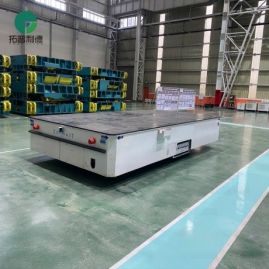
The trackless transfer cart measures 4810×2120×750mm and features a cast steel frame with a flat platform design, providing a stable load-bearing foundation for large transformers and other heavy workpieces. The cast steel frame structure balances overall strength with heavy load-bearing requirements, while the flat platform facilitates workpiece placement and unloading.
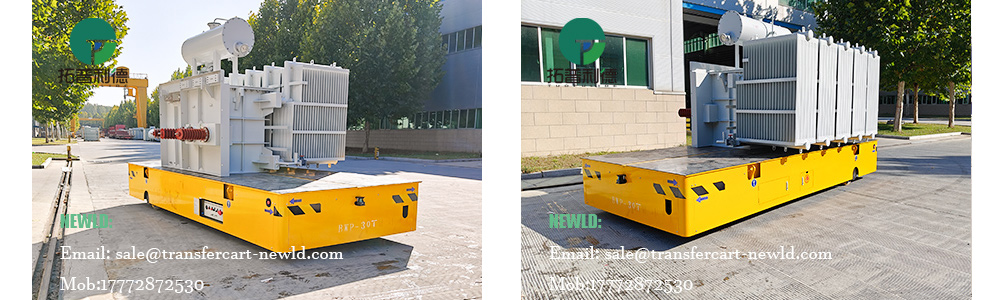
Free Operation
Powered by batteries and equipped with a portable charger, the transfer cart eliminates the need for fixed power lines and is not limited by cable length, enabling continuous transfer between workshops and multiple workstations. The operating speed is 0-26m/min, adjustable according to on-site transport distance and work pace. Furthermore, the polyurethane wheels ensure both stable operation and ground protection, making it suitable for material transfer between different areas within the workshop.
Safety in Use
This trackless transfer cart is equipped with both wireless remote control and wired handle, allowing operators to choose the appropriate control method based on site conditions. A power display screen allows for real-time monitoring of the equipment's remaining power, while audible and visual warning lights provide alerts during operation. An emergency stop button facilitates immediate shutdown in case of emergencies, further enhancing the safety and convenience of daily operations.
This 30 ton trackless transfer cart is primarily used for transferring large transformers between production workshops. Compared to fixed rail transport, the trackless design eliminates the need for pre-laid dedicated tracks, allowing for flexible route planning based on workshop layout, reducing site modification requirements, and facilitating equipment scheduling between different workstations.