
How to Improve the Efficiency of Large Material Transfer Using AGVs?
With the continuous upgrading of modern production, enterprises have placed higher demands on the efficiency, stability, and automation of material transfer in workshops.
Faced with materials of varying shapes and weights, how can we achieve safe transportation within limited space and ensure smooth connection between material transfer and subsequent production processes? Automated Guided Vehicles (AGVs) offer a new solution to this need.
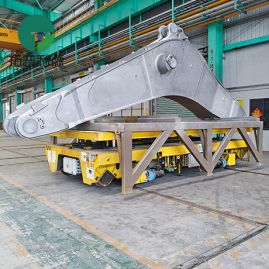
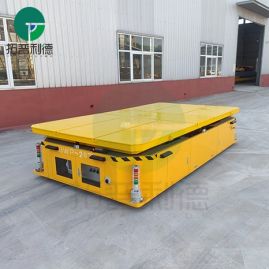
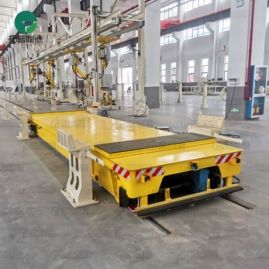
This 5 tons lithium battery powered trackless AGV, specifically designed for the transfer of large paper rolls, combines heavy duty transportation with the production process through customized brackets, magnetic strip navigation, and a PLC intelligent control system, providing a reference for optimizing workshop logistics.
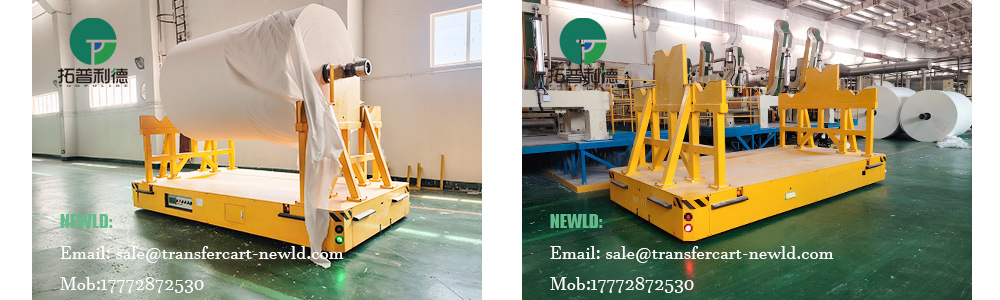
- Customized brackets ensure stable operation: Addressing the tendency of paper rolls to roll easily, the AGV platform has pre-reserved standard docking interfaces for installing dedicated brackets adapted to the outer diameter of the paper rolls. The bracket design features precise support holes to hold the materials, preventing shaking or damage during transportation and ensuring stable and safe heavy-duty handling.
- Magnetic strip navigation and PLC-based programmed scheduling: For scenarios with fixed routes and multiple devices sharing passageways within a workshop, this vehicle abandons the constraints of traditional tracks, employing magnetic strip navigation combined with a PLC intelligent control system. It achieves high-precision line-following operation and can flexibly set the handling frequency according to the upstream production rhythm, enabling seamless integration between processes.
- Intelligent remote control and system collaboration: To meet the needs of automation and safe production, the equipment is equipped with wireless remote control, wired handles, and intelligent charging stations, supporting remote sending of operation commands. The system can seamlessly integrate with the existing workshop scheduling platform, combining audible and visual warnings and safety touch edges to effectively reduce the risk of manual intervention and ensure accurate placement.
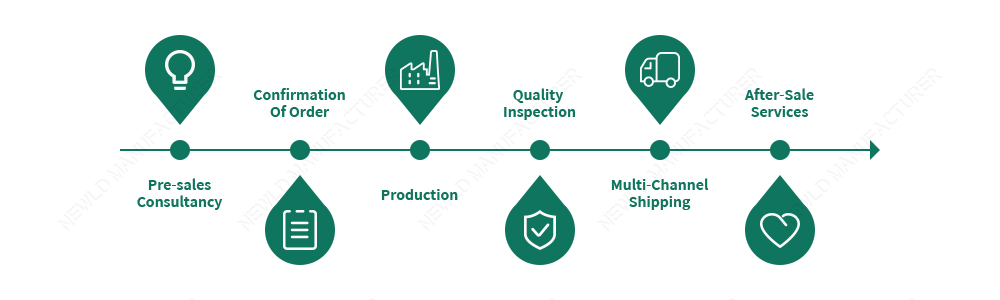
Improving the efficiency of large material handling depends not only on the load-bearing capacity of the equipment but also on the material fixing method, running route, loading and unloading conditions, and the connection of production processes.
In actual projects, specific products need to be comprehensively designed considering material size, load distribution, on-site passage space, loading and unloading methods, and the degree of automation.
By rationally configuring the load-bearing structure, navigation system, and control scheme, trackless AGVs can reduce the limitations of fixed tracks on the site, optimize the material transfer process, and create conditions for automated connection between production processes.