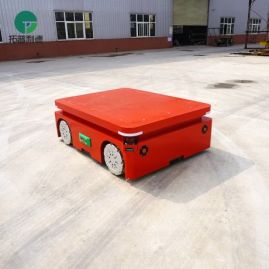

30 Tons Automated Guided Vehicle for Production Line
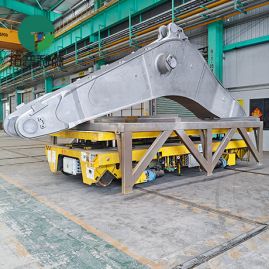
Recently, a 30 tons lithium battery powered trackless Automated Guided Vehicle (AGV) was officially put into use at a large aluminum processing company. Designed specifically for the efficient handling of large aluminum plates within the production workshop, this equipment marks a significant upgrade for the company in the field of heavy duty material handling, enabling trackless and intelligent operation.
Trackless Design
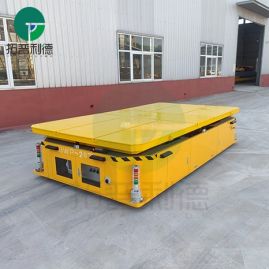
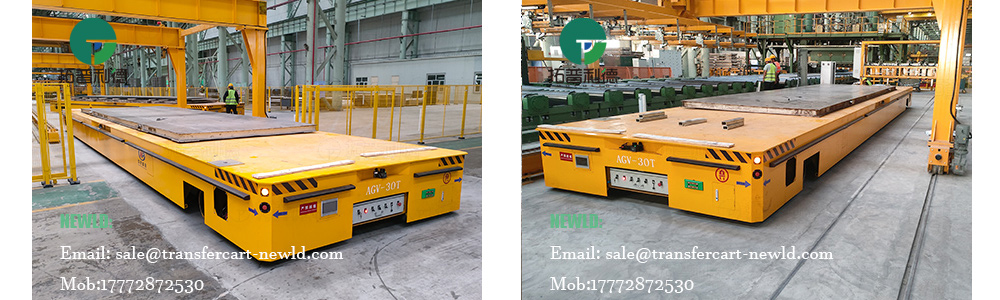
Unlike conventional rail mounted transfer carts, this automated guided vehicle utilizes a cast steel frame, resulting in stronger load-bearing capacity and a stable and reliable structure. It achieves autonomous navigation and path planning via a PLC control system. The flexible steering wheel drive system allows the vehicle to move flexibly between different workstations and workshops, truly achieving free transport without distance limitations.
Intelligent Control
This automated guided vehicle is equipped with an advanced PLC control system, supporting both wireless remote control and wired handle operation modes. It is simple to learn and use immediately. Powered by lithium batteries and equipped with intelligent charging stations, the AGV can achieve rapid recharging, long-term continuous operation, and zero emissions throughout the entire process.
Multiple Safety Protections
The automated guided vehicle integrates multiple active safety devices, including audible and visual warning lights, an emergency stop button, and safety touch edges. It also features an LED display screen showing real-time battery level and operating status, providing comprehensive safety for both personnel and the vehicle.
Reshaping Heavy Duty Logistics
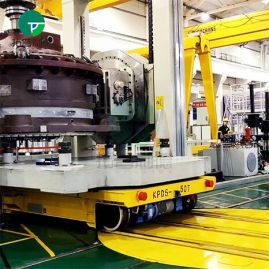
This automated guided vehicle primarily works in conjunction with automated loading and unloading equipment on the production floor to efficiently transfer large aluminum plates across workshops and workstations. It can be widely applied to heavy industries such as aerospace, rail transportation, and shipbuilding. Its heavy duty, flexible, and zero carbon characteristics significantly reduce manual labor intensity and transportation risks, providing strong equipment support for enterprises to build smart factories and implement green production.