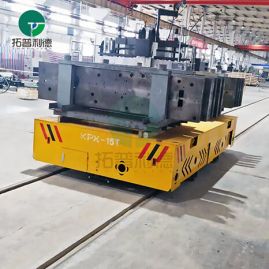

700 Tons Rail Transfer Cart for Train Handling
Production Challenges
In large industrial transportation areas, the traction of train cars and heavy materials faces challenges such as heavy loads and operational difficulties. Especially under conditions of high dust levels, high operating frequency, and long distances, meeting the demands of all-weather, high-intensity traction has become a pressing problem.
Solution
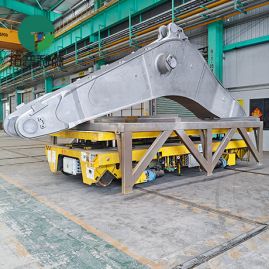
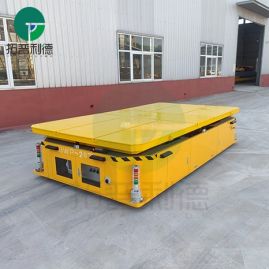
Based on the customer's needs and actual application environment, we designed this 700 tons safety sliding line powered rail transfer cart.
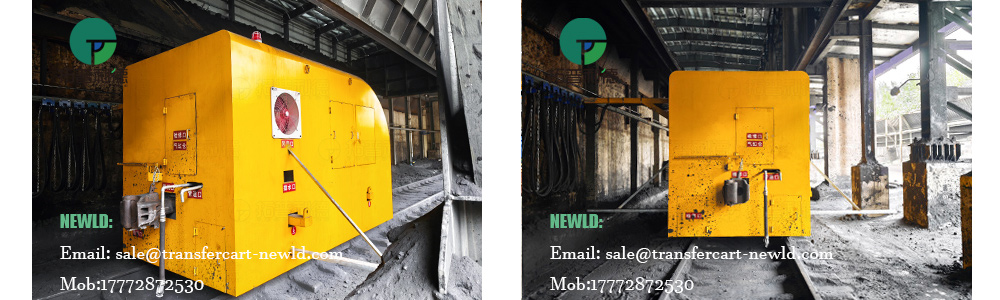
The equipment utilizes a continuous power supply via a safety sliding contact line, enabling continuous operation without distance or time limitations. The cart's structure features a box-beam frame design, combined with a customized platform layout, effectively improving overall load-bearing capacity and operational stability.
The cart is equipped with cast steel wheels, wireless remote control, wired handle control system, audible and visual warning lights, emergency stop button, and traction hook, among other functional modules, ensuring heavy-load capacity while also prioritizing ease of operation and safety on-site.
Advantages
Strong Heavy Duty Capacity: Meets the traction requirements of 700-ton trains, suitable for large-scale rail transport scenarios;
Stable Continuous Operation: The sliding contact line power supply reduces charging wait time and improves work cycle time;
Flexible Operation: Supports both wireless and wired dual-mode control;
Comprehensive Safety Assurance: This rail transfer cart equipped with an emergency stop and audible and visual warning system to enhance on-site operational safety.
Applications
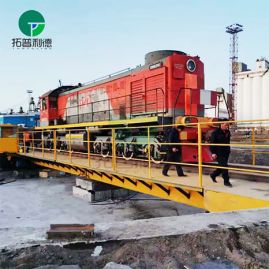
After being deployed on-site, the rail transfer cart undertakes train traction and heavy duty transport tasks, achieving stable and continuous operation within fixed track areas. Its enclosed structure combined with industrial-grade configuration allows it to adapt to high dust and high load conditions.
Operators can remotely control the equipment wirelessly from a distance, effectively reducing manual intervention and improving transport continuity and on-site organizational efficiency.
During operation, audible and visual alarms alert on-site personnel. In case of sudden malfunction, a one-button emergency stop and rail locking mechanism ensures stable operation even under harsh conditions, facilitating the transfer of entire train carriages.